
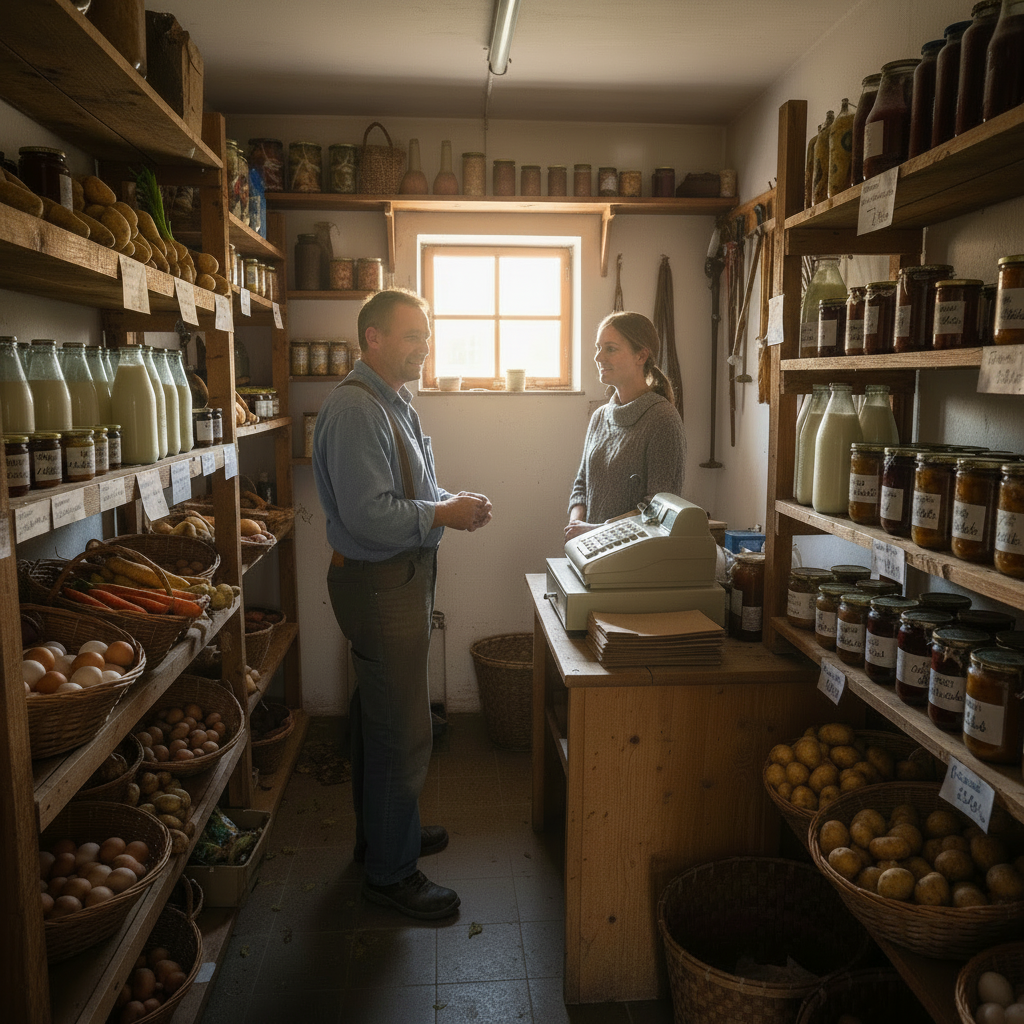
In the project “ReLaDi: Resilience, Structure, and Digitalization of Direct Farm Sales” (2023–2025), KMU Forschung Austria, in cooperation with the Salzburg University of Applied Sciences, conducted the first comprehensive structural analysis of direct farm sales and combined it with a qualitative best-practice analysis. The survey of 925 farms reveals extraordinary heterogeneity: a wide variety of characteristic combinations were recorded. Traditional “farm-gate sales” range from informal neighborhood sales to professional farm stores. At the time of the survey, 43% of the farms visited were staffed.
During crises—such as pandemics, supply chain disruptions, or geopolitical upheavals—direct marketing by farmers has proven to be more resilient than conventional distribution channels. Local supply systems without middlemen respond more flexibly to external shocks. Personal customer relationships and customer loyalty further strengthen this resilience.
7% of direct sellers actively use online channels, and 31% accept card payments. Both farms and consumers see the greatest potential in low-barrier measures such as well-maintained social media profiles, up-to-date websites, and reliable Google Maps listings. Full automation, on the other hand, is viewed with skepticism, as personal contact is considered a key success factor. According to the study, community-based farm shops and self-service solutions off-farm offer additional scaling potential (for more on distance selling, see also our studies on e-commerce in Austria).
 Newsletter

 Follow Us